




21 Oct, 2023
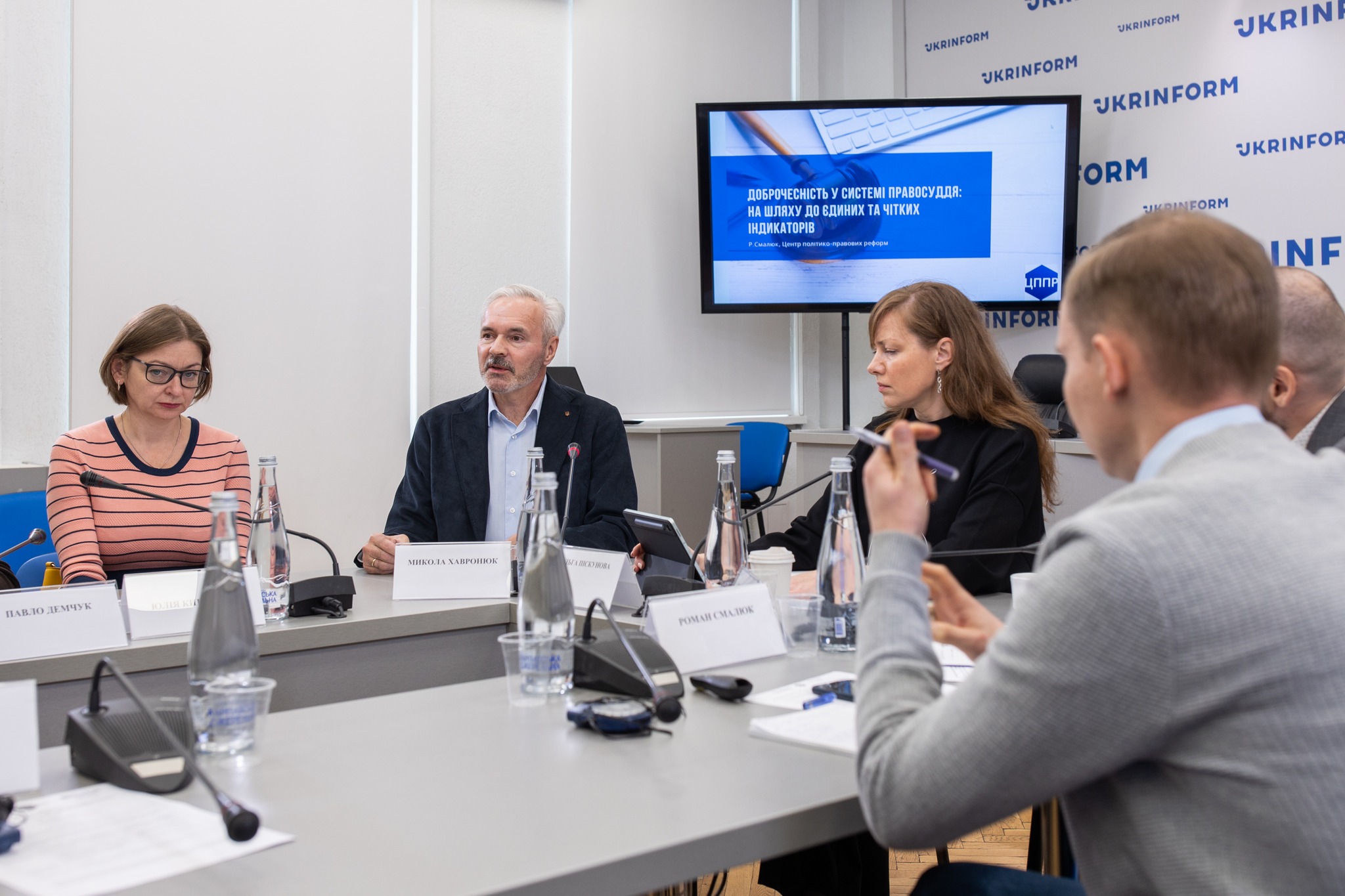
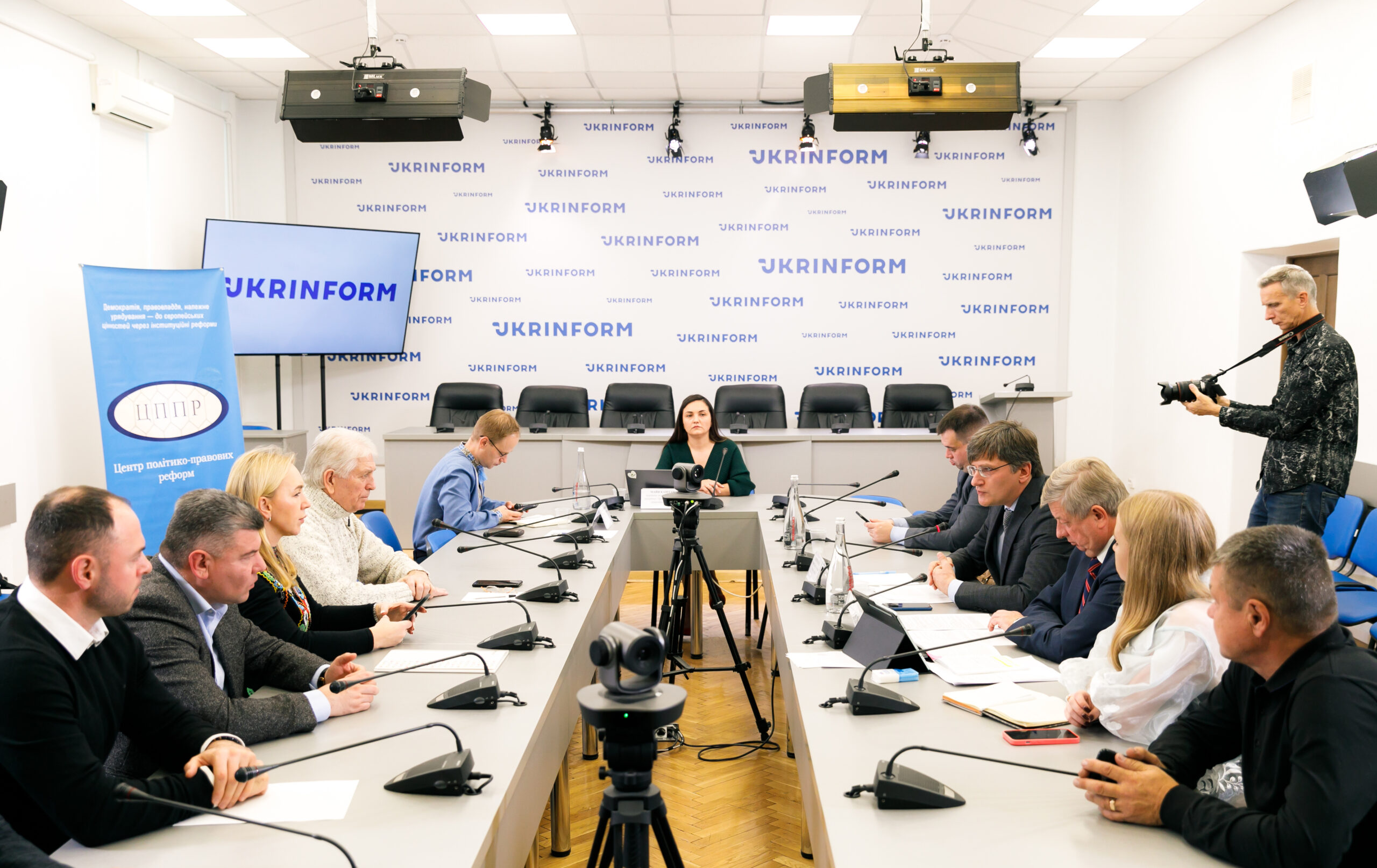
On 18 October 2023, the Centre of Policy and Legal Reform (CPLR) held a press conference on “Formation of the Constitutional Court of Ukraine in the context of European integration”. The event was relevant due to the fact that the deadline for submitting documents for the CCU judges vacant positions has expired on 17 October. The participants of the press conference expressed their opinions on the beginning of a new experience of competitive selection of candidates for the position of a CCU judge, the problem of vacant positions, and the procedure for forming the CCU in terms of European integration.
On 20 August, Law No. 3277-IX “On Amendments to Certain Legislative Acts of Ukraine on Clarification of Provisions on Competitive Selection of Candidates for the Position of a Judge of the Constitutional Court of Ukraine” came into force.
According to Denys Maslov, Chairman of the Verkhovna Rada Committee on Legal Policy, the adoption of this law has become a major step towards the openness of the competition process and the involvement of representatives of international organisations with which Ukraine cooperates in the field of rule of law, judicial reform and anti-corruption policy in the selection of CCU judges.
“This is probably the first time in Ukraine that political influence on the appointment of CCU judges, an extremely important body that is empowered, among other things, to declare unconstitutional laws of Ukraine, is minimised. And we have deliberately done this because we want to ensure that there are no issues with this process, no political influence, and maximum confidence in those candidates who will be selected and recommended for appointment as CCU judges,” he said.
According to Yaroslav Yurchyshyn, MP, a successful competition always consists of several components, and the most important one is who is the candidates applying for the positions. If the choice is not made after the fact, if conditions are not created where candidates with not only experience in law, but primarily in constitutional law, are involved in this process, it will be a big problem in the future.
“We are really in an active phase now – the openness of the competition, the quality of the candidates who are now in the Advisory Group of Experts, make it possible to positively assess the quality of the candidates who will be submitted for the CCU judges’ positions. I really hope that we will get a new quality, and this is necessary not only for our European integration, but also because we, as a country, especially in the post-war period, need a politically independent, professional Constitutional Court that will guarantee people’s rights,” he said.
The Centre of Policy and Legal Reform has been consistently advocating for a reduction of the political role in the CCU formation since the constitutional amendments of 2016. “The introduction of an effective competitive selection of candidates for the positions of judges of the Constitutional Court of Ukraine is one of the key conditions for Ukraine’s integration into the EU,” said Andriy Mahera, the CPLR expert. According to him, there is a need to clarify many constitutional provisions, including those in Chapter XII of the Constitution of Ukraine “Constitutional Court of Ukraine”. However, it is impossible to amend the Constitution during martial law, it is a constant.
Petro Stetsiuk, Razumkov Centre’s legal advisor, retired judge of the Constitutional Court of Ukraine, noted that today the European and Euro-Atlantic course of the state is a constitutionally enshrined duty of public authorities to guide the state and lead it to the European Union: “Our goal is clearly defined – full membership in the EU and NATO. If we are moving towards Europe, towards the practice of European standards, then obviously we need to adopt the best practices of the procedure for electing or appointing judges of the Constitutional Courts. No other democratic state has even close to the procedure that is being introduced in Ukraine today. But this is secondary. The primary goal is to become a member of the European Union, and we need to do everything we can to achieve this.”
Dainius Žalimas, former President of the Constitutional Court of the Republic of Lithuania, welcomed the fact that Ukraine is moving forward with filling the CCU vacancies and expressed hope that the process will be efficient and not delayed by unreasonable obstacles, as it sometimes happened before.
“The Constitutional Court is a body that is inevitably formed by the political authorities, and, of course, we cannot ignore a certain degree of discretion of the political authorities in selecting candidates to the court, who, as a result, may be extremely dependent on them (political authorities – ed.). I also welcome the competitive selection mechanism introduced in Ukraine, which involves the involvement of international experts. Thanks to the established mechanism, it would be possible to better insure the selection of competent candidates from different branches of law,” he said.
The discussion was also joined by Giorgi Papuashvili, former chairmen of the Constitutional Courts of Georgia.
To watch the recording of the press conference, please follow the link.
This event was made possible by the generous support of the American people through the United States Agency for International Development (USAID). The contents of the event were the sole responsibility of the Centre of Policy and Legal Reform and do not necessarily reflect the views of USAID or the United States Government.
Was this article helpful?


News

Experts blogs
26 Feb, 2024
Our Fighting Democracy


27 May, 2022
Ukraine’s Parliament in Wartime