





01 Jun, 2023
Sections
The congress of legal scholars failed to elect a member of the HCJ; the vacant position remains unfilled for sixteenth month – and with good reasons
Event
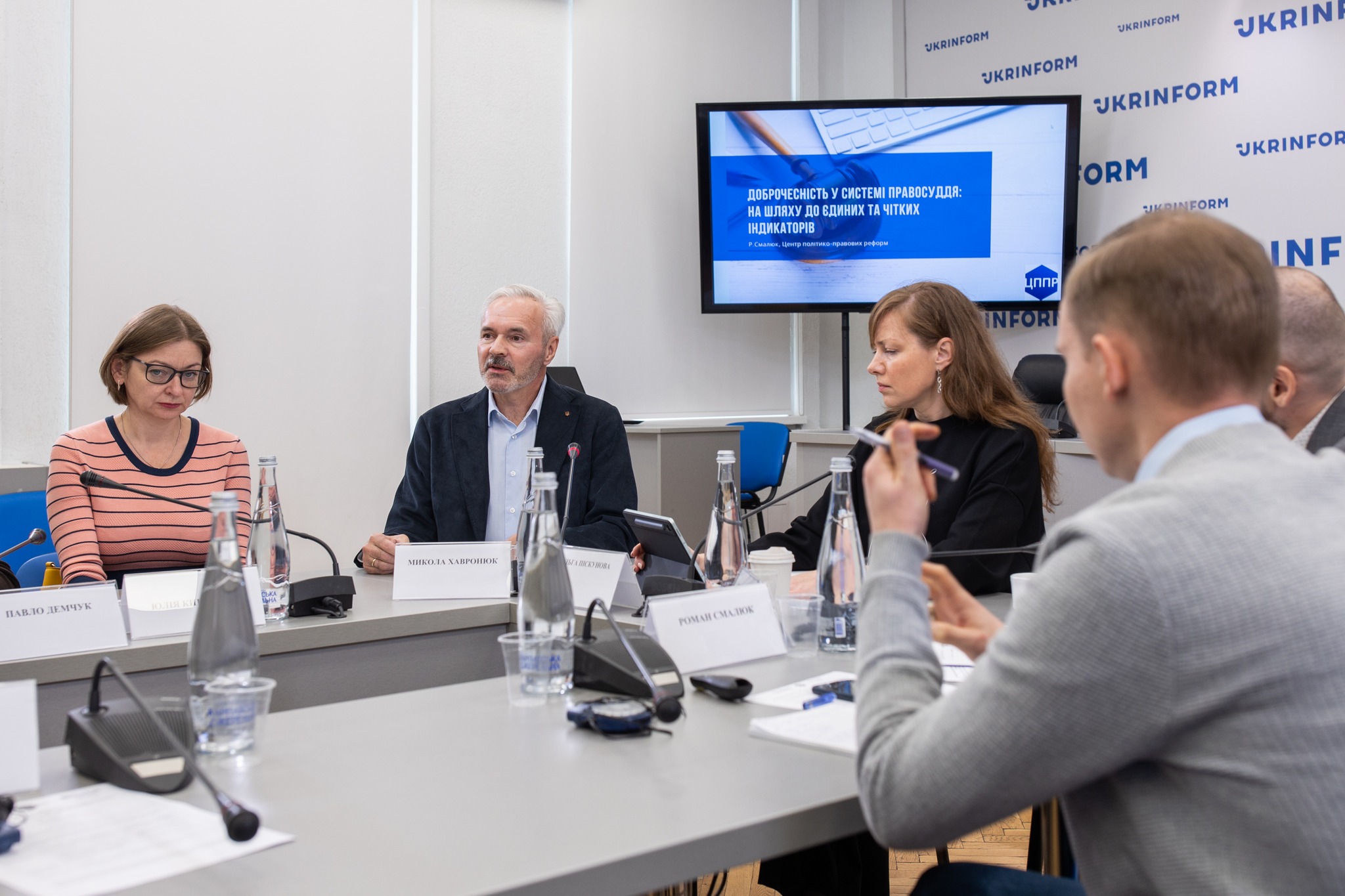
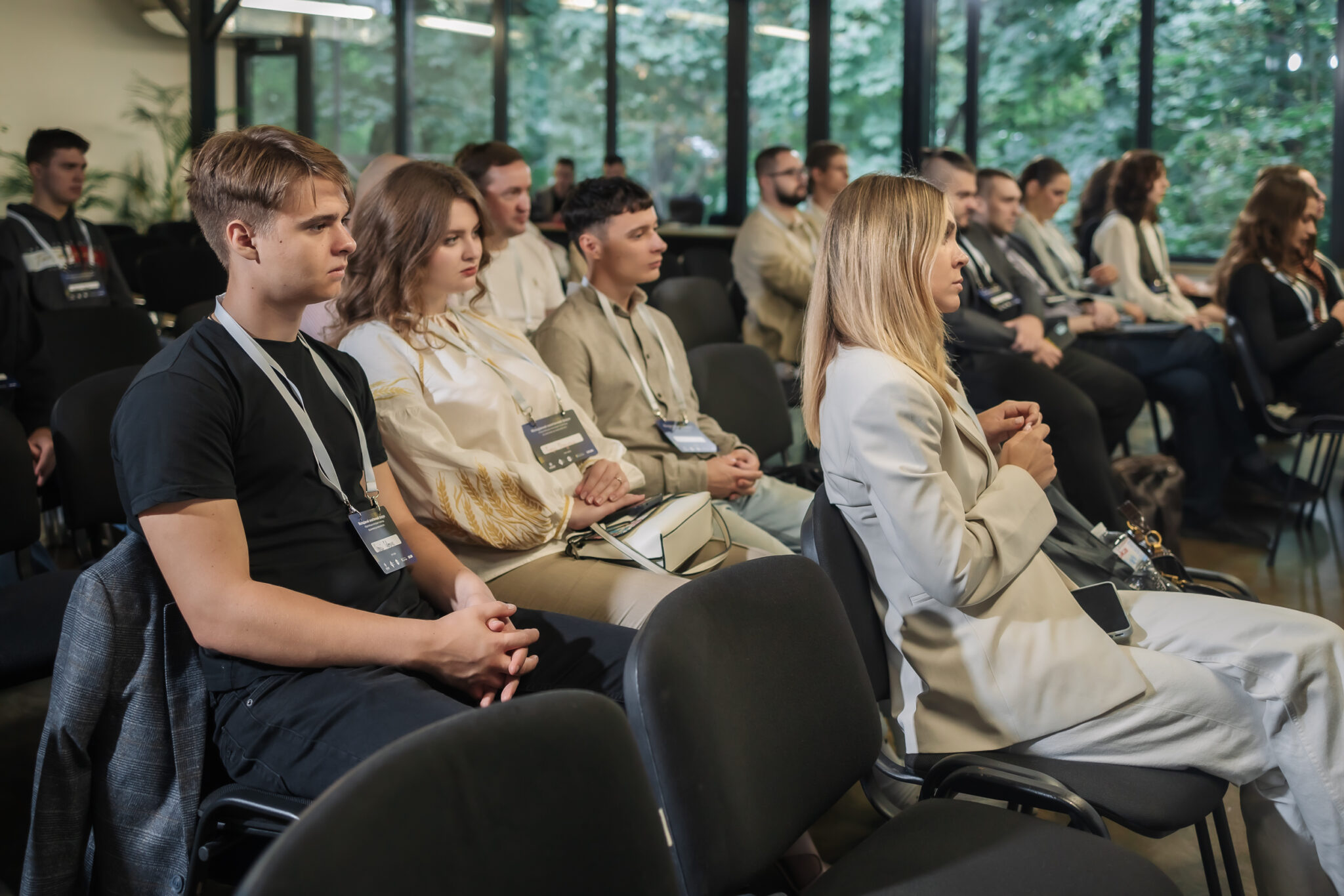
On June 2, 2023, the Congress of Representatives of Higher Legal Education Institutions and Scholarly Institutions (hereinafter – Congress) took place. The Congress was supposed to elect one more member of the High Council of Justice. Oleg Rozhnov, Associate Professor of the Department of Civil Procedure of Yaroslav the Wise National University of Law, and Mykola Khavronyuk, Professor of the Department of Criminal and Criminal Procedure Law of the National University of Kyiv-Mohyla Academy (who is also a member of the board of the Centre of Policy and Legal Reform) were candidates for this position. Oleg Rozhnov received more votes, but neither of the candidates was elected. Why?
CPLR’s expert assessment
According to Article 131 of the Constitution of Ukraine, the High Council of Justice (hereinafter – HCJ) consists of 21 members, two of which are elected by the Congress of Representatives of Higher Legal Education Institutions (hereinafter – HEI) and Scholarly Institutions (hereinafter – SI).
The election procedure for the HCJ members by the Congress of Representatives of Legal HEI and SI and other relevant issues are defined by the Law “On the High Council of Justice” (Articles 9, 13–15).
1. The law defines the following as legal HEIs and SIs for purposes of electing the HCJ members:
1) higher educational institutions (universities, academies, or institutes, except the higher military educational institutions) that have educational units that, as of the day of the Congress, a) have been training specialists with a master’s degree for at least ten years and b) have a license to train at least seventy-five persons as specialists with a master’s degree in Law or International Law;
2) scholarly and research institutions that, as of the day of the Congress, are under the jurisdiction of the National Academy of Sciences of Ukraine or the national sectoral academies of sciences, have passed state certification, and have been conducting scholarly activity in the area of law as their main activity for at least ten years.
However, it has not been specified how exactly the institutions should confirm the presence of the facts set forth in the Law as of the day of the Congress: i.e., that an HEI has really been training specialists with a master’s degree for at least ten years and has a license for training at least 75 people as specialists with a master’s degree in law or international law, or that an SI has really passed the state certification and has been conducting scholarly activities in the area of law as its main activity for at least ten years.
For example, there were only 51 HEIs and SIs represented at the previous Congress that was held on August 19, 2022, while the number went up to 65 for the Congress on June 2, 2023. Notably, in less than a year, 3 institutions disappeared, but 17 new HEIs and SIs were added. Yet, it is not known why and how this rotation occured.
Moreover, if changes happen so quickly, it is not impossible that the number of HEIs and Sis could change significantly between the day of announcing the Congress and nomination of delegates by each of the participating HEIs and SIs and the day of convening the Congress.
Thus, it is obvious that the Ministry of Education and Science of Ukraine must officially confirm the relevant information specified in the Law in a special publication on its website each time as of the day of the congress.
2. For obvious reasons, the law does not prohibit representatives of any HEI and SI from being nominated for the position of a member of the HCJ.
At the same time, the Law creates hidden conditions under which certain candidates receive priority, based on internal connections and dominance of certain HEIs and SIs. Notably, this is related to the fact that seven SIs (State Scholarly Institution “Institute of Information, Security, and Law”, Scientific-Research Institute of Law-Making and Scientific-Legal Expertise, Scientific-Research Institute of Intellectual Property, Academician F. Burchack Scientific-Research Institute of Private Law and Entrepreneurship, Academician V. Stashis Scientific-Research Institute for the Study of Criminality Issues, Scientific-Research Institute of State Building and Local Self-Government, and Scientific-Research Institute of Legal Support for Innovation and Development) are all structural subdivisions of the National Academy of Legal Sciences of Ukraine (NALSU). The latter’s presidium, located next door to the Yaroslav the Wise National University of Law, largely consists of professors of the same university, including its head, while the NALSU itself has most recently been chaired by a representative of the same university for several years.
Candidates confirmed within the abovementioned HEIs and SIs always have significant advantage at the Congress, with the votes of 16 delegates, as well as the support of NALSU through its members. This, in turn, makes it easier for such candidates to reach agreements with representatives of other HEIs and SIs.
3. To address organizational and technical issues related to preparations for the Congress, the law envisions the creation of an organizational committee of representatives of legal HEIs and SIs (with the invitation to participate in the work of the committee sent by the body convening the congress), as well as the election of the chair and the secretary by the Congress, who sign decision on election as members of the HCJ following the outcome of the Congress’s vote.
However, the law does not contain exceptions related to the conflict of interests for certain persons regarding their membership in the organizational committee, or their election as the chair, secretary, or member of the proxy or counting commissions of the Congress.
As a result, the last two Congresses that included Yaroslav the Wise National University of Law representatives as candidates for the HCJ membership both had the same person – a vice-rector of this particular university – as the chair or the secretary.
In both cases, the candidate for the HCJ membership who happened to be a representative of the same university received the largest number of votes compared to other candidates.
It should also be added that on August 19, 2022, the Congress was held in Poltava, on the premises of a structural division of the same university.
4. The law provides that the format of ballots and other organizational and technical issues regarding the voting procedure and counting of votes are established by the Congress.
However, the law does not specify who develops the draft Procedure for conducting the Congress, nor does it take into account that the delegates to the Congress are not able to really discuss the provisions of this multi-page document and check its compliance with the Law during the time allotted for its approval, and therefore simply default to voting for the draft proposed by the organizing committee.
5. The Procedure for conducting the Congress approved on June 2, 2023, provides that the Congress is deemed authorized if at least half of the total number of representatives of legal HEIs and SIs participate in its work.
However, there was no similar provision in the Procedure for conducting the Congress approved on December 10, 2021 (just as there may not be a similar provision in the Procedure approved by any Congress in the future). As a result, a representative of the Yaroslav the Wise National University of Law was elected on August 19, 2022 with only 37 votes of the Congress’s delegates (rather than 52, as should be taking into account that each HEI and SI has two representatives, for a total number of 102 delegates, with the candidate who receives the majority of votes of all Congress delegates considered elected).
6. According to the Law, the selection of candidates for the position of the HCJ member is generally carried out according to the following criteria: a) professional competence, b) professional ethics, and c) integrity. The Ethics Council provides the body convening the Congress with an opinion on the compliance of each candidate with only two criteria – professional ethics and integrity. It follows logically that the Congress needs to verify the candidates’ compliance with the professional competence criteria.
However, the procedures for conducting the Congress that were approved by the last Congresses on December 10, 2021 and June 2, 2023 do not mention the verification of candidates’ compliance with this criterion and, accordingly, do not establish the elements of each candidate’s conformity. Voting takes place directly after listening to the candidates’ speeches and any discussion, and the selection of a winner is entirely subjective and does not exclude the possibility of influence either by the heads of relevant HEIs and SIs or by any other persons and organizations.
Thus, the provisions of the Law “On the High Council of Justice” regarding the regulation of the Congress of Representatives of Legal HEIs and SIs are incomplete and imperfect, as they contain hidden opportunities for the dominance of certain HEIs and SIs and for ensuring the victory of only their nominated candidates.
The law must provide for the following:
– the duty of the Ministry of Education and Science to officially confirm the legitimacy of the delegation of representatives each time as of the day of the Congress;
– provisions on prevention of any conflict of interests during the composition of working bodies of the Congress;
– the authority of the Congress subject to the participation in its work of at least half of the total number of nominated representatives of legal HEIs and SIs, as well as all other key issues regarding the voting procedure and counting of votes;
– the duty of the Congress to select candidates for the positions of the HCJ members according to the professional competence criterion, the components of which must be determined in advance.
The alternative draft Law “On Amendments to Certain Legislative Acts of Ukraine to Clarify Certain Provisions on Competitive Selection of Candidates for the Position of a Judge of the Constitutional Court of Ukraine” (reg. № 9322-2) was registered in the Verkhovna Rada of Ukraine
Event
On May 30, an alternative draft law was registered in Verkhovna Rada to clarify certain provisions on the competitive selection of candidates for the position of a judge of the Constitutional Court of Ukraine (№9322-2). Previously, the CPLR experts have already expressed their position on the main draft law № 9322, which can be found here.
Legal assessment
The main novelty of the alternative draft law is the proposal to entrust the powers of the Advisory Group of Experts, which is intended to assist the appointing authorities in assessing the moral and professional qualities in the selection of CCU judges, to the first composition of the Ethics Council formed in accordance with the Law of Ukraine № 1798-VIII “On the High Council of Justice”. It is assumed that the Ethics Council will function in the status of the AGE for a transitional period of 6 years.
CPLR experts point out that according to the law, the Ethics Council assists the subjects of appointment of HCJ members in establishing the compliance of a candidate for this position with the criteria of professional ethics and integrity. The Supreme Court in its decision of 23.03.2023 in case № 990/161/22 also emphasized the status and powers of the Ethics Council. The Ethics Council is formed by the Councils of judges, prosecutors and attorneys as self-governing bodies, as well as the National Academy of Legal Sciences of Ukraine. Therefore, the correlation between the subjects of appointment of CCU judges defined by the Constitution and the subjects of the AGE formation, which is intended to assist the subjects of appointment in evaluating candidates for the position of CCU judge, is largely disturbed. It is important to note that the Ethics Council assesses only the candidate’s compliance with the criteria of professional ethics and integrity, as opposed to the AGE, which is authorized to assess the level of competence in the field of law. Also, from a point of legal technique, granting the Ethics Council such powers requires amendments not only to the Law of Ukraine “On the Constitutional Court of Ukraine” but also to the Law of Ukraine “On the High Council of Justice.”
Therefore, the CPLR does not recommend the adoption of the draft law № 9322-2, taking into account the above comments, and emphasizes the revision of the main draft law № 9322.
Was this article helpful?