







31 Jan, 2024
Sections
Corruption Perceptions Index: Ukraine’s leap forward
Event
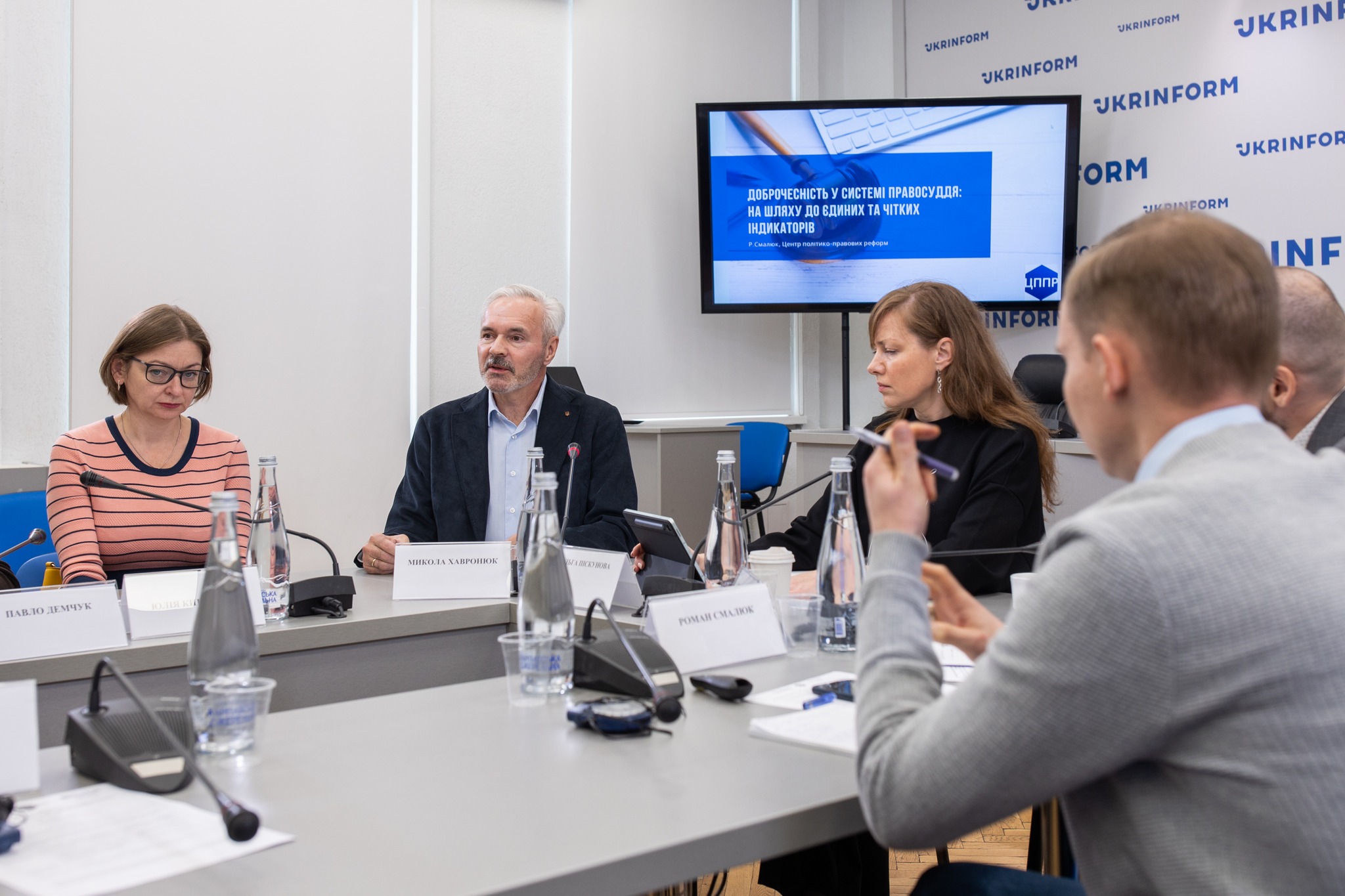
Transparency International published its annual Corruption Perceptions Index (CPI) for 2023. Ukraine scored 36 points out of 100, moving up a record 12 positions in the global ranking – from 116th to 104th place.
As a reminder, in 2012-2022, Ukraine had both gained and dropped points, with its score and position varied as follows: 26 (144th) – 25 (144th) – 26 (142nd) – 27 (130th) – 29 (131st) – 30 (130th) – 32 (120th) – 30 (126th) – 33 (117th) – 32 (122nd) – 33 (116th).
Overall, the increase from 26 to 36 points and improved placement from 144th to 104th position is a significant success, which is the result of joint efforts of the state, society, and the international partners.
CPLR’s expert assessment
The CPI is the result of a comprehensive study. The index does not reflect the level of corruption, but rather its perception – i.e., how business representatives and experts assess corruption in the public sector. This study uses more than ten sources of information and benchmarks. A country’s overall score depends on its anti-corruption policy, the openness and transparency of public authorities, the objectivity of media coverage of corruption, and the measures taken to prevent and combat corruption.
During 2023, Ukraine really showed significant progress in the anti-corruption area. The corruption prevention area was marked with the approval and initial implementation of the State Anti-Corruption Program for 2023-2025, the resumption of public officials’ declarations and full vetting of these declarations, and the resumption of public procurement using the ProZorro platform. The key anti-corruption agencies (the National Anti-Corruption Bureau of Ukraine and the Specialized Anti-Corruption Prosecutor’s Office) and the ARMA received new leaders selected through transparent competitions. A competition for the position of the Head of the National Agency for Corruption Prevention was launched.
After the High Council of Justice, the High Qualification Commission of Judges, and the Public Integrity Council were formed, the qualification assessment of judges of local and appellate courts resumed, which is supposed to cleanse the judicial system from judges that lack integrity. The newly created Advisory Group of Experts has launched a competition for the positions of three judges
Last year was also marked by a number of high-profile corruption revelations, with criminal proceedings initiated against top officials. The former heads of the Supreme Court and the State Property Fund, judges of the Kyiv Appellate Court, and several MPs were notified of corruption suspicions. The High Anti-Corruption Court is also increasing its pace of work, having issued 65 verdicts (previously, the average number of verdicts during 2019-2022 was 52). The oligarchs, who had a fairly strong influence on the economy and politics in Ukraine before Russia’s full-scale
To be fair, it should be noted that all of these successes would not be possible without the participation of civil society, which from time to time had to remind the government of the need for and importance of systemic and consistent steps in the anti-corruption area. Journalist investigations play an important role in exposing corruption. The public is waiting for a logical outcome of corruption investigations in the defense sector. A competition for the HACC judges positions is supposed to take place in 2024, while the Specialized Anti-Corruption Prosecutor’s Office, having gained its long-awaited autonomy, should confirm its ability to act independently from the Prosecutor General’s Office.
To ensure Ukraine retains its success in the coming years and the CPI score increases by 2-3 points each year, it is necessary to continue the anti-corruption reforms, fully implement the measures envisioned by the State Anti-Corruption Program for 2021-2025, and develop and adopt the Anti-Corruption Strategy for the period after 2025 and a new state program for its implementation. Of course, all of this is necessary not for the purpose of placement in the world rankings, but for better life of Ukrainians. As a reminder, Denmark tops the CPI rankings as the global leader with 90 points, while among Ukraine’s friends and neighbors, Moldova and Hungary each have 42 points, Romania has 46 points, and Poland and Slovakia each have 54 points. As such, we certainly have some catching up to do.
President protecting the business: what is the impact of the NSDC’s decision on economic security protection?
Event
On January 23, the President enacted the NSDC’s decision “On urgent measures to ensure economic security for the period of martial law” (Presidential Decree №21/2024), which recommended the followings:
1.To establish the Council for support of entrepreneurship under martial law. Subsequently, such a Council was established by Presidential Decree №30/2024 of January 26.
2.The Government is to submit to the Verkhovna Rada the draft laws providing amendments to:
– the Law of Ukraine “On the Bureau of economic security of Ukraine” on strengthening the mechanisms of functioning the Bureau of economic security;
– the CPC of Ukraine, the Laws “On operational and investigative activities”, “On the basic principles of state financial control in Ukraine”, and “On organizational and legal framework for combating organized crime” on establishing additional guarantees for the protection of legitimate business interests during criminal proceedings and ensuring consolidation of powers of law enforcement agencies to combat offenses that infringe on the state economy in a single body – the Bureau of Economic Security of Ukraine (BES);
– the Law of Ukraine “On defense procurement” on regulating the maximum level of profit for public contracts that were/are being executed during the state of martial law, as well as to perform audit of the system of monitoring risks and criteria for blocking tax invoices and procedures and criteria for unblocking them.
3.The OPG, the SBI, the National Police, the BES, and the SSU are recommended to:
– to conduct an audit of restrictive measures applied against business entities in criminal proceedings and to determine the justification for their further application, as well as the relevance of information regarding them in public electronic registers (within three months);
– to refrain from conducting procedural actions in criminal proceedings for three months, if such application may block business activities of business entities.
4.The OPG and the law enforcement agencies are called to urgently conduct an audit of criminal proceedings against business entities, as well as, jointly with the Ministry of Digital Transformation and the Ministry of Justice, to ensure the development of an analytical module for the Unified Register of Pre-Trial Investigations (URPTI) for the submission of online complaints regarding illegal actions of law enforcement officers against businesses.
On January 29, in order to implement para. 2 of the aforementioned Decision, the Government submitted to the Verkhovna Rada draft Law №10440 on amendments to the CPC of Ukraine and other legislative acts to improve the activity of the BES, which provides for amendments to the legal framework for the activities of this body, in particular in terms of execution of decisions of an investigative judge or a court on temporary access to belongings and documents and on the search of other property, as well as the jurisdiction over certain criminal offenses.
CPLR’s assessment
At the beginning of this year, the CPLR experts already drew attention to the timeliness and the necessity of reforming the Bureau of Economic Security, a law enforcement agency that has recently started operating but that, according to many estimates, does not meet the purpose for which it was created, while businesses in Ukraine continue to suffer from illegal pressure from law enforcement officers, which reduces the investment attractiveness of Ukrainian enterprises on both domestic and foreign markets.
The recent high-profile criminal proceedings that have caused outrage among the public due to the involvement of well-known entrepreneurs, primarily investment banker I. Mazepa, have once again drawn attention to the issue of illegal pressure on business, which remains a systemic problem even under martial law. The Business Ombudsman Council, Ukrainian entrepreneurs, and representatives of the expert community, as well as Ukraine’s international partners have drawn attention to this problem. As a result, Deputy Prime Minister for Euro-Atlantic Integration Olha Stefanishyna announced that the weekly monitoring of anti-corruption and judicial bodies may be supplemented by monitoring of law enforcement agencies in the context of the situation with BES reform. This step shows that this is not just a one-off internal issue of law enforcement reform, but an issue of priority reform areas along with judicial and anti-corruption reform that is in the focus of the EU’s attention.
As such, the NSDC’s Decision, to some extent, responds to current issues of state policy on reforming the BES, as well as the criminal prosecution practices in proceedings involving business entities. While the need to reform the BES, to some extent, was mentioned earlier in the decision of the Parliament’s Committee on Finance, Tax, and Customs Policy (February 2023) and the European Commission’s Report (November 2023), the issue presently has to do with consolidated actions expected both at the regulatory level (i.e., the development of systemic legislative amendments by the Government) and at the operational level (i.e., conducting the audit of proceedings, review of investigative and procedural practices, etc.).
At the same time, the regulatory regulation of the problem started earlier and would have happened even without the decision of the NSDC. Moreover, the Government had previously committed to adopting the legislation to “reset” the BES by the end of June 2024 in accordance with the Memoranda of Economic and Financial Policy of March 24, 2023 and of June 19, 2023, in order to improve the legal framework for the BES activities (as part of the $17.5 billion Extended Fund Facility (EFF) program). This is exactly the goal stated in the Explanatory Note to the draft Law №10440 submitted by the Government to the Parliament on January 29. That is, without mentioning the NSDC’s Decision, since the text of the draft law was approved at the end of 2023 and was at the stage of technical finalization before being submitted to the Parliament.
Draft Law №10440 proposes to strengthen the BES’s control over criminal offenses under its jurisdiction, as well as provides for the obligation to involve representatives of the Business Ombudsman Council when executing a decision on temporary access to belongings and documents and during the search (amendments to Articles 165 and 236 of the CPC of Ukraine, respectively). Without going into a detailed analysis, it is worth noting that it is difficult to imagine the presence of such persons in several thousand criminal proceedings in which the BES regularly conducts certain actions. Moreover, adequate control over the procedure for implementing the rulings is carried out not only by investigators and operatives, but primarily by a prosecutor and an investigating judge, who must respond to complaints in accordance with the procedure established by procedural law. It is difficult to see how the presence of additional representatives during investigative actions that have already been authorized by an investigating judge or a court (i.e., the prosecution’s motion was found to be justified and granted) will be helpful. That being said, subsequent thorough analysis of this draft law may make the law maker’s intent more clear.
Along with this, on October 13, 2023, the Parliament’s specialized Committee recommended the Verkhovna Rada to adopt as the basis the draft law №10088 “On priority measures to reform the BES”, which we analyzed earlier. It concerns changes in the organizational principles of this body, primarily the improvement of competitive procedures for selecting its management and other changes to improve the quality of personnel working in the Bureau.
Regarding the recommendations to “refrain from conducting investigative actions” and similar ones, it is difficult to imagine their practical implementation, since neither the NSDC nor the President have any procedural powers, while prosecutors are responsible for the tactics and strategy of criminal prosecution, within which they decide whether to conduct a particular investigative or procedural action and enjoy a high level of independence. Therefore, neither other authorities nor even superiors can interfere in these matters (except by providing reasonable written instructions or using informal practices of removing “unfavored prosecutors” by changing the group of prosecutors, etc.).
Thus, regulatory decisions on “restarting the BES” and amending the CPC of Ukraine to concentrate the powers to investigate economic criminal offenses within one law enforcement agency – the BES – were developed previously, and the Government gradually fulfilled its relevant obligations until the NSDC decision. The question now is the quality and balance of these amendments, as they relate to the entire criminal process and must comply with the general principles of criminal proceedings. Moreover, it may be difficult to conduct a preliminary assessment of the feasibility of the Business Ombudsman Council’s representatives’ attendance during the enforcement of rulings by an investigating judge or a court on temporary access to belongings/documents and searches.
At the same time, recommendations to investigators and prosecutors on the tactics and strategy of investigating criminal proceedings, the need to conduct an audit, and even the creation of another tool for filing complaints regarding illegal actions in the URPTI seem ineffective given the impossibility of interfering with the work of the prosecutor’s office and the fact that the powers to conduct investigative and procedural actions are available under any circumstances. After all, the key issue is the quality of their implementation and control over these actions, not the mere fact of having the authority to prosecute offenses that may be committed by business entities.
As such, it is necessary to strengthen judicial control over the observance of human rights and freedoms by investigating judges and courts, and to further develop both law enforcement and prosecutorial bodies that provide procedural guidance in such cases, in particular by strengthening the specialized law enforcement agency (BES) and improving the skills of prosecutors. No regulatory amendments alone are sufficient to resolve the issue of illegal pressure on businesses. These must involve a set of regulatory, personnel, and operational measures.
Was this article helpful?


Analytics
15 Dec, 2025
Weekly analysis for 09 — 15 December
05 Sep, 2025
Weekly analysis for 26 August — 01 September