





29 Aug, 2023
Sections
Special tribunal for the crime of aggression: details on Ukraine’s position
Event
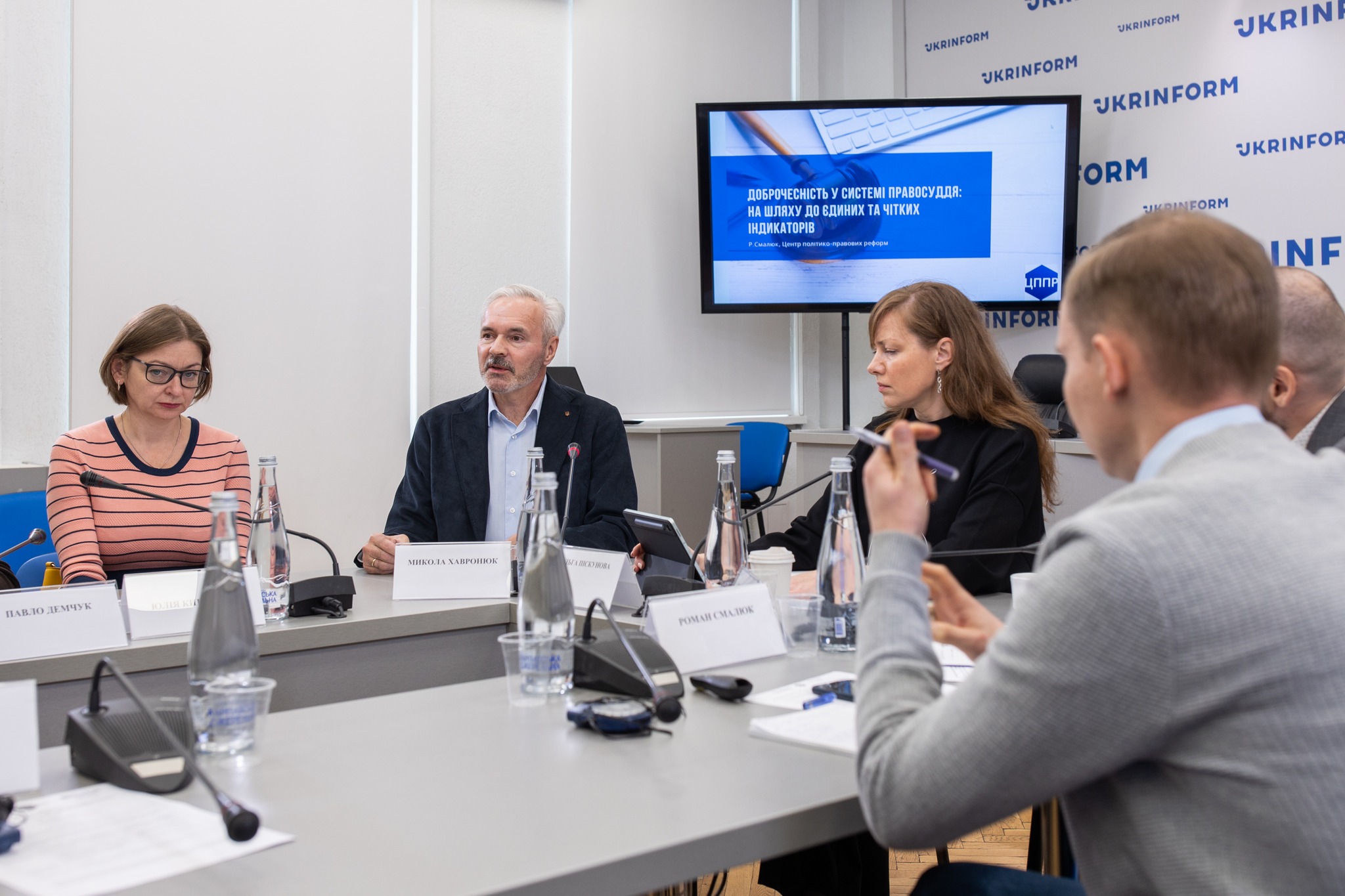
On August 21, 2023, the international conference “Special tribunal for the crime of aggression against Ukraine. Justice to be served”, dedicated to the issue of creating a special tribunal regarding the crime of Russian aggression against Ukraine was held under the patronage of the Office of the President.
Subsequently, some Ukrainian media spread information that Ukraine allegedly “made concessions” and agreed to creation of a “hybrid tribunal” located in Hague and operating under Dutch law.
Instead, Ambassador of Ukraine A. Korynevych and Deputy Head of the Office of the President A. Smirnov stated that no final decisions had been made. According to them, the authorities, in cooperation with international partners, continue to discuss various models of the Special Tribunal.
CPLR’s assessment
Introduction
Over the 18 months of full-scale war, Ukraine has been working on bringing Russia and its military-political leadership to international responsibility. Ukrainian diplomats are working on creating a Special Tribunal for the crime of aggression against Ukraine to achieve fair punishment for the crime of Russia’s aggression.
It should be noted that aggression is the main among all international crimes committed by Russia, since it was the decision of Russia’s higher military-political leadership to initiate armed aggression against a sovereign state, Russian military commits tens of thousands of war crimes, crimes against humanity, and the crime of genocide. This aggressive war is the largest in Europe since the World War II, and the justice must be restored, with the guilty punished: namely the state of Russia and its leaders, who decided to grossly violate international law. First of all, for the full and comprehensive international responsibility of Russia, Ukraine requires 2 mechanisms – criminal responsibility for the crime of aggression and a compensation mechanism. This means that Ukraine is faced with making fateful decisions for the world. In terms of compensations, Ukraine has achieved certain successes (the Damage Register has been approved). The International Criminal Court is investigating other systematic international crimes committed by Russia. To punish the crime of aggression, Ukraine will be assisted by the Special Tribunal, and the investigation materials for this tribunal have recently been initiated by the Center for the Investigation of Aggression Crimes.
Specifics of the international crime of aggression
Armed aggression against a sovereign state is an unusual international crime. The last time individuals were prosecuted for the crime of aggression (then termed as a “crime against peace”) was under the Nuremberg and Tokyo military tribunals. Only in 2018, after the approval of the “Kampala Amendments” which incorporated the crime of aggression into the Rome Statute, the International Criminal Court activated its own jurisdiction over this crime – at the same time, there are a number of conditions regarding the “jurisdiction” of a specific case to the Court.
According to the ICC, the crime of aggression means “the planning, preparation, initiation or execution by a person who is able to effectively control or direct the political or military actions of the state, an act of aggression, which by its nature, gravity and scale constitutes a manifest violation of the UN Charter”. An act of aggression may include invasion, annexation, port blockades, etc. At the same time, the ICC does not clarify how the “nature, gravity and scale of violations” should be assessed, so the crime of aggression is still somewhat ambiguous. Thus, responsibility for the crime of aggression can only be individual criminal, not state, and currently only the ICC is able to consider such cases at the international level. The jurisdiction of the ICC regarding this crime does not extend neither to Ukraine nor Russia (as they are not parties to the Rome Statute and, consequently, the “Kampala Amendments”, and it is not possible to initiate proceedings through the UN Security Council for known reasons). At the same time, due to the elitist nature of the crime of aggression, only top state officials can be found guilty: the president, the head of the government and the minister of foreign affairs, who are endowed with personal and functional immunities.
Tribunal formats
If you suddenly decide to inquire about the development of a tribunal for the Russia’s leadership for the crime of aggression against Ukraine, you will have to turn to different sources, because there is a certain inconsistency in the communication of the Office of the President and diplomats.
In general, taking into account the statements made by A. Smirnov during the conference on August 21 and various interviews by A. Korynevych, we can summarize that currently there are following basic models of the future tribunal for the Russia’s leadership.
1) through the UN General Assembly: the tribunal is created on the basis of Ukraine’s agreement with the UN, accompanied by a request of the GA to the Secretary General to conclude such an agreement with Ukraine
This model has been passionately advocated by Ukraine. The fact is that Kyiv seeks to endow the tribunal with maximum international legitimacy, and support of a representative body (if, unfortunately, not the Security Council) of the UN being the only universal intergovernmental organization is an excellent option. However, Western partners do not support this model. At the conference on August 21, A. Smirnov shared: “The doctrine of international law is hostage to global politics, geopolitics. And some of our partners fear that this precedent will be used against them, because they are also conducting military campaigns abroad. And we must speak honestly about this”;
2) on the basis of an international agreement: declaration of Ukraine in the form of an international agreement
Such a tribunal is another priority model for Ukraine. As A. Smirnov explained, Ukraine initiates the signing of a multilateral agreement, and the states, signing and ratifying it, will give substance and international recognition to such a tribunal;
3) “hybrid model”: according to the legal system of Ukraine
Kyiv opposes such a model. First of all, the incorporation of such an internationalized court into Ukraine’s judicial system would require amendments to the Constitution, which is impossible during martial law. Secondly, the judicial system of Ukraine is far from perfect, and judges, prosecutors and lawyers do not have experience in dealing with the international crime of aggression. Thirdly, this tribunal model will not have the necessary effect: tribunal decisions must have a strong international legal basis and broad international legitimacy to ensure fairl punishment of the guilty and prevent the crime of aggression in the future;
4) modified “hybrid model”: based on the legal system of another state
According to some media, it is this model that has the best chance of approval. Theoretically, this model has the highest chances of being approved. Theoretically this model provides for the operation of the tribunal in a country with a reliable judicial system, developed and stable legal system, and experience in investigating and prosecuting international criminals. The necessary level of legitimacy can be achieved through a vote in the UN General Assembly in support of such a hybrid court in chosen country.
Is Nuremberg 2.0 real: the search for a unique model
It is important to clarify that replicating the Nuremberg model process is impossible. First, Ukraine will not have military control over Russian territory to detain suspects. Secondly, Russia will not sign a surrender agreement, because the state of war has not been officially declared. Thirdly, the tribunal for Russia will work with only one category of international crimes – the crime of aggression against Ukraine, thus requiring an original model with a unique set of legal tools.
At the same time, the reference to the Nuremberg and Tokyo trials is important, as they are the only international criminal tribunals where individuals were tried for committing the crime of aggression. This analogy is also significant because Ukraine is undergoing the largest war in Europe since 1945, and consequently, the legal response from the international community should be similar that, provided after World War II. Furthermore, despite these differences, it should be remembered that one of the priority scenarios for Ukraine is the creation of an “alternative to the UN” international tribunal, based on a multilateral treaty – this is how the Nuremberg Tribunal was created on the basis of the London Agreement of 1945.
Putin and beyond: whom, when and where will be tried
To the surprise of many, in the discussions, the partners advocate the idea that the trial against Putin, Mishustin and Lavrov should begin after their resignation. There is obviously a geopolitical reason for this: the tribunal regarding the current president (and even more – the permanent member state of the UN Security Council) could set a precedent for prosecuting current leaders of both democratic (some of which conduct foreign military operations) and non-democratic states (to persecute their own interests, sometimes states need to negotiate even with the presidents of countries with an authoritarian, criminal regime).
However, in general, the situation appears that the subjects of various legal proceedings could be the following individuals:
- a) Putin, Mishustin, and Lavrov, as well as members of the Russian Security Council: Minister of Defense, branch commanders, Rosgvardiya (National Guard’s) officials, Russian Armed Forces personnel, etc. (according to A. Korynevych’s assumptions, there could be up to 20 individuals) – are expected to appear before the Tribunal for the crime of aggression;
- b) field commanders, ordinary soldiers – are expected to appear in the national courts of Ukraine and other states, as well as in the International Criminal Court (ICC) for war crimes, crimes against humanity, and genocide.
Furthermore, parallel proceedings could potentially take place against the top leaders of Russia: before the Tribunal for aggression and before the ICC for example, for genocide.
It should be mentioned about the immunities of this officials:
- a) functional immunity: ministers, military commanders, commanders of the National Guard, and others, as well as former presidents, prime ministers, and minister of foreign affairs – this immunity can be overcome by any tribunal model.
- b) personal immunity: current president, prime minister, and minister of foreign affairs– the larger the tribunal (international tribunal model), the greater chance of overcoming this immunity.
In view of this, it can be assumed that the “top three” current Russia’s leaders – Putin, Mishustin, Lavrov – will become subjects of judicial proceedings before the tribunal only after their resignation (which should satisfy the aforementioned geopolitical interests of our partners).
By the way, a trial in absentia format: a) under the international tribunal model – most likely impossible; b) under the internationalized tribunal model – possible.
Connection with compensation for Ukraine
As mentioned, the issue of reparations and compensations for Ukraine should be a component of bringing Russia and its leadership to responsibility for armed aggression and other crimes. Obviously, Ukraine with its future compensation mechanism, is a pioneer in the international legal maze of damage compensation. However, it should be noted that the Special Tribunal for the Crime of Aggression is not legally connected in any way to the Register of Damages, agreed within the framework of the Council of Europe, nor is it connected to the compensation mechanism for Ukraine, as well as potential reparations resulted from inter-state disputes at the UN International Court of Justice. The reason for this is that the tribunal will issue a decision on bringing Russia’s leadership to individual criminal responsibility, which will entail punishment in the form of deprivation of freedom of specific individuals. At the same time, the issue of monetary payments to Ukraine, its citizens and companies concerns the responsibility of Russia as a state and is resolved separately.
You are currently here: positions of Ukraine and partners
Thus, according to the statements of government officials, negotiations are ongoing, Ukraine, in cooperation with its allies, is analyzing all possible tribunal models. The authorities have not agreed to any particular option, as there is obviously no final decision. At the same time, it was stated that the selection of the tribunal model itself slows down the process: details have already been thought out for various formats. As the media reported, the Office of the President hopes to decide on the format of the tribunal by the end of the year, after discussing this issue within the framework of the coordination group (Core Group) in September. It is important that currently Ukraine still defends the idea of an international tribunal based on an agreement with the UN or a broad intergovernmental agreement. However, the firmness of the partners’ positions forces to seek a compromise.
Was this article helpful?


Analytics
05 Sep, 2025
Weekly analysis for 19 — 25 August
05 Sep, 2025
Weekly analysis for 05 — 11 August
20 Jun, 2023
Weekly analytics for 14 — 20 June